

You may have heard about kratom or seen products containing 7-OH popping up in stores. They come in different forms and are sometimes marketed as natural products. But what exactly are they, how do they affect your body, and what are the risks? Let’s break down the facts so you can make informed decisions about your health.
What Are Kratom and 7-OH?
Kratom is a plant native to Southeast Asia. Its leaves contain natural compounds that affect the brain, including receptors that respond to opioids. Depending on the amount, kratom can have different effects. It may make someone feel more awake and energetic (stimulating) or calm and sleepy (sedating).
One compound found in kratom is called 7-hydroxymitragynine, or 7-OH. It naturally occurs in very small amounts in kratom leaves, but some products contain much higher, concentrated amounts. Like opioids, 7-OH affects the brain’s opioid receptors, which can create feelings of relaxation, pain relief, and sleepiness. Kratom can also have these effects, but may make people feel more awake and energetic depending on the amount. Concentrated 7-OH products can have much stronger effects and carry greater risks. “Natural” doesn’t mean safe, and concentrated 7-OH products are not the same as the plant leaf.
What Do Kratom and 7-OH Products Look Like?
Kratom and 7-OH products come in many forms, including gummies, tablets, capsules, powders, drinks, and small liquid shots. Their packaging can be bright and colorful, sometimes resembling everyday snacks, beverages, or wellness products.
These products are commonly found in convenience stores, gas stations, smoke shops, and online. They may be advertised as natural supplements or marketed for pain relief, increased energy, relaxation, or help with opioid withdrawal.
But there is a bigger concern: these products are not tested or approved for safety, quality, or accurate labeling. This means you may not know exactly what is in a product or how strong it is. The amount of kratom or 7-OH can vary widely between products, making their effects difficult to predict.
Are Kratom and 7-OH Products Legal?
Even though these products may still be found in stores or online, they are not legal to sell for human consumption in California.
The California Department of Public Health (CDPH) has confirmed that kratom and 7-OH products are not approved as foods, dietary supplements, or medications. Selling or manufacturing these products for consumption is prohibited under California law.
The U.S. Food and Drug Administration (FDA) has also warned consumers about the risks of these products and has not approved kratom or 7-OH for medical use.
Just because a product is available for purchase or labeled as a natural supplement doesn’t mean it is safe, regulated, or legal to sell.
How Do Kratom and 7-OH Affect Your Body?
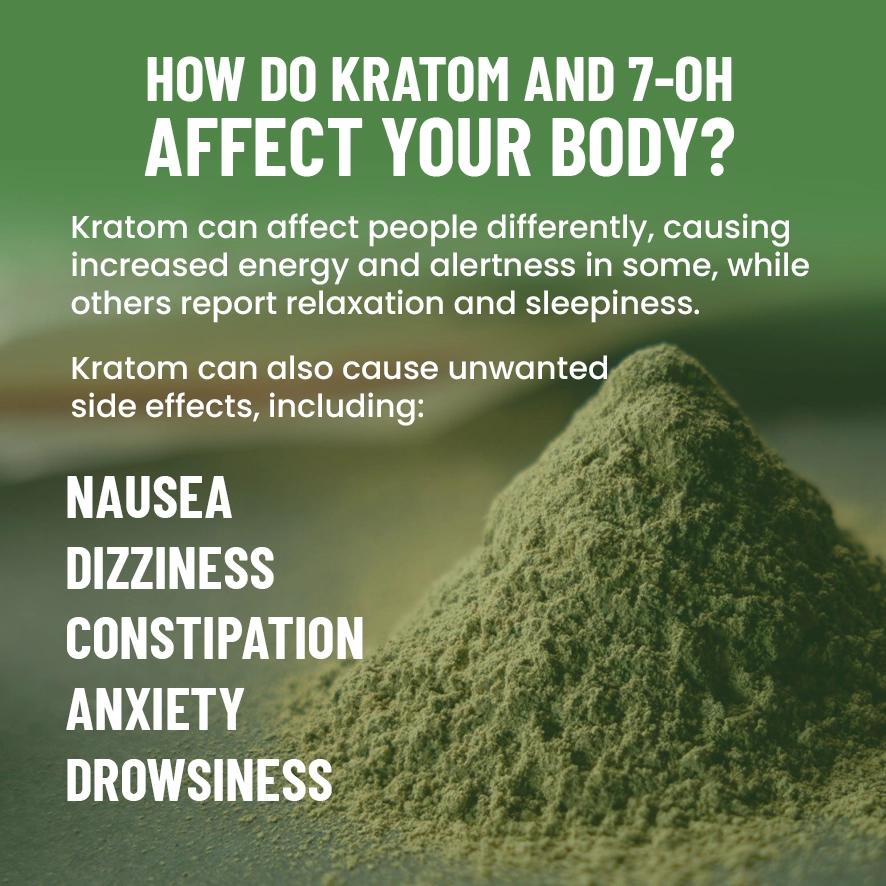
Concentrated 7-OH products are especially concerning because of their powerful opioid-like effects. These effects can slow down breathing and lead to serious health complications.
Understanding the Risks of Kratom and 7-OH
Like opioids, kratom and 7-OH can lead to dependence. This means that with repeated use, the body gets used to having the substance and may begin to rely on it. If someone stops using it, they may experience withdrawal symptoms, which can make them feel sick or uncomfortable.
Kratom and 7-OH products can both carry a risk of overdose, which can lead to serious health complications or death.
Mixing 7-OH with other substances, especially alcohol, opioids, or other substances that slow down the central nervous system, can greatly increase the risk of overdose.
Knowing the warning signs of an overdose can help save a life. Watch for:
- Slow or shallow breathing
- Unconsciousness or unresponsiveness
- Difficulty waking someone up
If you think someone is experiencing an overdose, call 911 immediately and give naloxone if it is available. Naloxone works by blocking the same brain receptors that opioids affect, helping reverse the dangerous effects of an overdose, including slowed or stopped breathing. Because 7-OH acts on these same receptors, naloxone can also help reverse an overdose involving 7-OH. More than one dose may be needed, and naloxone can wear off before the overdose is over, so always call 911 even if the person wakes up. If the person does not respond, continue following emergency instructions and stay with them until help arrives.
Where Can You Find Help?
Sometimes it isn’t so clear if you’re just going through a rough patch or if you need more support. For more information on the dWhether you’re concerned about your own substance use or worried about someone you care about, support is available.
If you or someone you know needs support with substance use, you can call SAMHSA’s National Helpline at 1-800-662-HELP (4357). This free, confidential service is available 24/7 and can connect individuals and families with treatment options and other support.
Sources
CDPH: Facts About Kratom What it Supports: Definitions, effects, dependence, and risks
CDPH: Kratom Health Advisory What it Supports: Product appearance, availability, regulation, and overdose
FDA: 7-OH Warning What it Supports: Concentrated 7-OH and federal restrictions
CDC: About Naloxone What it Supports: How naloxone works
SAMHSA: National Helpline What it Supports: Substance-use support information